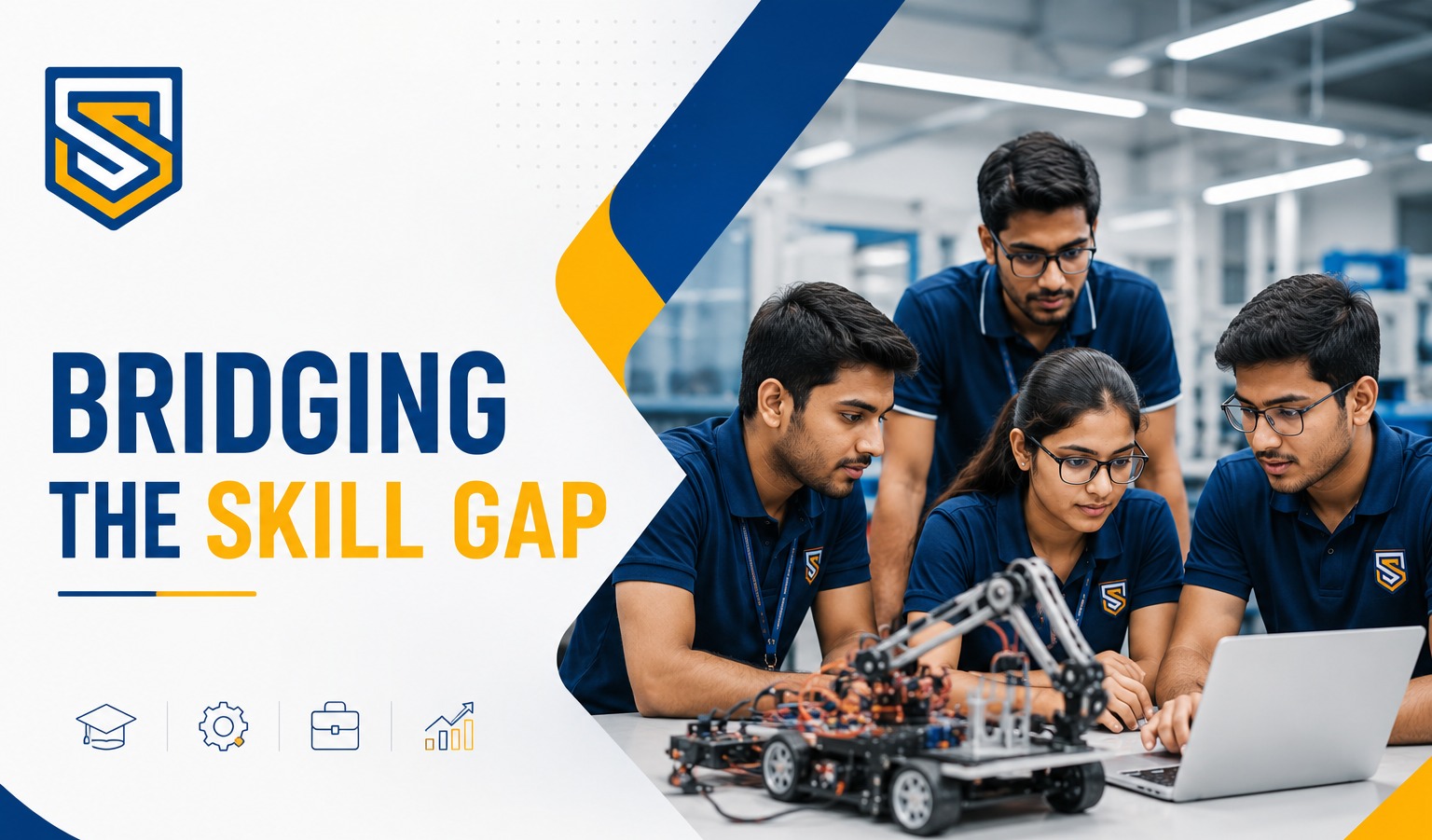
The expectations from higher education have changed significantly over the past decade. Earning a degree is still important, but employers today are looking for something more. They want graduates who can adapt quickly, solve practical problems, work with modern technologies, and contribute from the first day on the job. This shift has created a growing conversation around the gap between academic learning and industry expectations.
In West Bengal, private universities are increasingly responding to this challenge by strengthening collaborations with businesses, research organisations, startups, and technology companies. Rather than limiting education to classroom lectures, many institutions are introducing practical learning methods that expose students to real industry environments throughout their academic journey.
As a result, industry-integrated private universities in West Bengal are gaining attention among students who want an education that combines academic knowledge with practical experience. These universities focus on internships, live projects, industry mentoring, innovation, entrepreneurship, and skill development alongside traditional degree programmes.
This article explores how industry-integrated private universities in West Bengal are helping bridge the skill gap, why industry collaboration matters in modern education, and what students should consider when selecting a university that prepares them for future careers.
Understanding the Skill Gap
The term skill gap refers to the difference between what students learn during their education and the skills employers expect in professional workplaces.
Many graduates possess strong theoretical knowledge but may have limited experience in applying concepts to practical situations. Employers often seek candidates who can:
-
Solve real-world problems
-
Work with modern software and technology
-
Communicate effectively
-
Collaborate in teams
-
Adapt to changing work environments
-
Learn new skills quickly
Bridging this gap requires more than updating textbooks. It requires stronger collaboration between educational institutions and industry.
Why Industry Integration Matters Today
Industries are changing faster than ever before.
Artificial Intelligence, automation, cloud computing, digital manufacturing, biotechnology, renewable energy, fintech, and smart infrastructure are reshaping the employment landscape.
Universities must continuously adapt to ensure graduates remain relevant in these evolving sectors.
This is where industry-integrated private universities in West Bengal play an important role. Through partnerships with companies and professionals, they create learning experiences that reflect current industry practices instead of relying solely on theoretical instruction.
Learning Beyond the Classroom
Modern education extends well beyond lectures and examinations.
Industry integration encourages students to apply classroom concepts through practical experiences such as:
-
Industrial visits
-
Live business projects
-
Laboratory-based learning
-
Case study discussions
-
Technical workshops
-
Design challenges
-
Hackathons
-
Simulation exercises
These activities help students understand how theoretical concepts are used in professional environments.
Internship Opportunities Build Workplace Confidence
Internships are among the most valuable components of an industry-integrated education.
During internships, students experience workplace culture, professional communication, project deadlines, and collaborative problem-solving.
Benefits include:
-
Practical exposure
-
Better understanding of industry expectations
-
Improved technical skills
-
Professional networking
-
Stronger resumes
-
Increased confidence during placements
Even short internships can provide valuable learning that complements classroom education.
Industry Experts Bring Real-World Perspectives
Guest lectures, expert talks, and mentorship sessions allow students to learn directly from professionals working in their respective industries.
These interactions help students understand:
-
Emerging technologies
-
Workplace challenges
-
Career pathways
-
Professional ethics
-
Industry trends
-
Future job opportunities
Learning from experienced practitioners often provides insights that textbooks cannot fully capture.
Curriculum Designed Around Industry Needs
One characteristic often associated with industry-integrated private universities in West Bengal is their effort to keep academic programmes aligned with changing industry requirements.
Modern curricula increasingly include topics such as:
-
Artificial Intelligence
-
Machine Learning
-
Data Science
-
Cybersecurity
-
Cloud Computing
-
Internet of Things (IoT)
-
Business Analytics
-
Renewable Energy
-
Digital Marketing
-
Entrepreneurship
Including contemporary subjects helps students develop skills that remain relevant after graduation.
Project-Based Learning Encourages Innovation
Instead of relying only on examinations, many universities encourage students to complete practical projects throughout their academic programmes.
Examples include:
-
Software applications
-
Smart agriculture solutions
-
Renewable energy models
-
Robotics projects
-
Mobile applications
-
Healthcare technology solutions
-
Business analytics dashboards
Projects improve creativity, teamwork, and practical problem-solving while giving students a portfolio they can showcase during recruitment.
The Growing Importance of Soft Skills
Technical expertise alone is no longer sufficient.
Employers also evaluate communication, adaptability, leadership, and collaboration.
Many industry-integrated private universities in West Bengal therefore encourage students to develop:
-
Communication skills
-
Presentation abilities
-
Critical thinking
-
Leadership qualities
-
Time management
-
Professional etiquette
-
Team collaboration
-
Decision-making
These competencies are valuable across almost every profession.
Research and Innovation as Part of Learning
Innovation often begins during university education.
Research opportunities encourage students to explore ideas, test solutions, and contribute to technological or social advancement.
Students involved in research may gain experience in:
-
Experimental design
-
Data analysis
-
Technical writing
-
Patent development
-
Prototype creation
-
Scientific presentations
Such experiences strengthen both academic and professional profiles.
Entrepreneurship and Startup Support
Not every graduate plans to seek traditional employment.
Some aspire to build startups or launch innovative businesses.
Many private universities now support entrepreneurship through:
-
Startup incubation centres
-
Innovation cells
-
Business mentoring
-
Pitch competitions
-
Entrepreneurship workshops
-
Access to industry mentors
These initiatives encourage students to transform ideas into practical ventures.
Digital Skills for a Digital Economy
Digital transformation affects almost every profession.
Whether students pursue engineering, management, healthcare, law, science, or media, digital literacy has become increasingly important.
Industry-integrated education often encourages students to develop skills in:
-
Data analysis
-
Digital collaboration tools
-
Cloud platforms
-
Programming basics
-
Artificial Intelligence applications
-
Cybersecurity awareness
These competencies improve workplace readiness across industries.
Industry Collaboration Benefits Faculty Too
Industry integration is not limited to students.
Faculty members also benefit through:
-
Collaborative research
-
Faculty development programmes
-
Industrial training
-
Joint innovation projects
-
Knowledge exchange
This enables educators to bring updated industry perspectives into the classroom.
How Students Can Identify Industry-Integrated Universities
Students evaluating higher education institutions should consider questions such as:
-
Does the curriculum reflect current industry trends?
-
Are internships encouraged or integrated into programmes?
-
Are guest lectures conducted regularly?
-
Does the university organise industrial visits?
-
Are practical projects part of academic assessment?
-
Is entrepreneurship encouraged?
-
Are modern laboratories and innovation centres available?
-
Does the university collaborate with industries for research and training?
Looking beyond advertisements and focusing on measurable learning opportunities helps students make informed decisions.
The Future of Higher Education in West Bengal
The future of higher education will increasingly depend on collaboration between academia and industry.
Emerging technologies, sustainability, automation, healthcare innovation, and digital transformation will continue changing workplace expectations.
Universities that successfully combine academic excellence with practical learning will be better positioned to prepare graduates for evolving careers.
This trend suggests that industry-integrated private universities in West Bengal will continue playing an important role in developing a workforce equipped for both current and future employment needs.
Frequently Asked Questions
What are industry-integrated private universities?
They are universities that combine academic education with practical industry exposure through internships, live projects, industrial collaborations, workshops, research, and skill development activities.
Why is industry integration important?
Industry integration helps students develop practical knowledge, workplace skills, and professional confidence while reducing the gap between academic education and employer expectations.
How do internships improve employability?
Internships provide hands-on experience, expose students to professional environments, improve communication skills, and strengthen resumes before graduation.
Do industry-integrated universities focus only on technical courses?
No. Industry integration benefits students across disciplines, including management, healthcare, sciences, humanities, law, commerce, media, and engineering.
What skills do employers value most today?
Employers typically look for technical competence, problem-solving ability, communication, teamwork, adaptability, digital literacy, and willingness to learn.
The demands of today's workplace require graduates who can think critically, adapt to technological change, and apply their knowledge in practical situations. While academic excellence remains important, industry exposure has become an equally valuable component of higher education.
By promoting internships, project-based learning, research, entrepreneurship, and collaboration with professionals, industry-integrated private universities in West Bengal are helping students build skills that extend beyond traditional classroom learning. These experiences not only improve employability but also encourage innovation, confidence, and lifelong learning.
For students planning higher education, choosing a university should involve more than comparing rankings or infrastructure. Evaluating the quality of industry engagement, practical learning opportunities, faculty expertise, and support for skill development can provide a clearer picture of how well an institution prepares graduates for the challenges of a rapidly evolving professional world.